


Pregnancy and your skin: normal changes, what you can do and what can wait
Written by Douae Elle · October 13, 2026
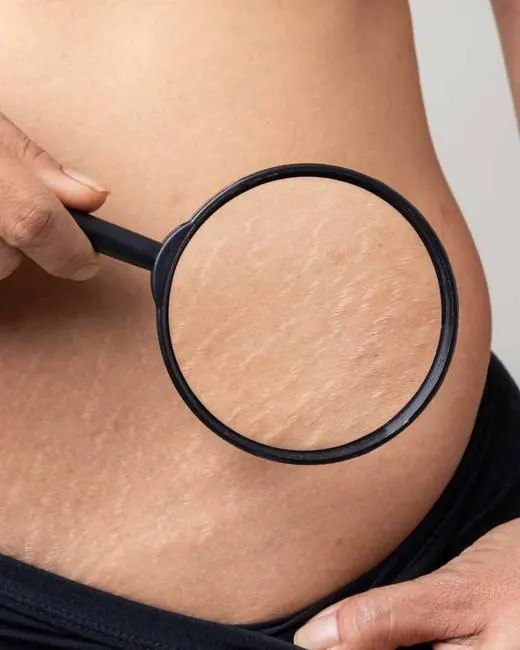
Pregnancy transforms the whole body, and the skin is no exception. Dark patches, breakouts, stretch marks, hair falling out after the birth: most of these changes are normal and temporary. Here's what happens, what you can do during pregnancy, and what's better kept for later.
One principle guides everything below: during pregnancy and breastfeeding, we postpone most medical aesthetic treatments. Your physician or midwife remains your first reference for anything related to your health.
The most common changes
Pregnancy mask (melasma)
Brown patches on the cheeks, forehead or upper lip, caused by hormones and made worse by the sun. They often fade after the birth, but not always completely.
Acne
Hormonal shifts can bring on breakouts, especially in the first trimester, even in people who no longer had acne.
Stretch marks
Pink or purplish lines on the belly, breasts, hips or thighs, linked to the skin stretching quickly. They fade over time and become lighter and finer.
The dark line (linea nigra) and pigmentation
A dark line on the belly and stronger pigmentation in some areas. They usually fade in the months after the birth.
More sensitive or drier skin
Some skin reacts more to usual products during pregnancy.
Hair loss after the birth
During pregnancy, less hair falls out. A few months after the birth, a lot of hair sheds at once. It's common and usually temporary; hair typically returns to normal within the year. If the shedding continues, talk to your physician.
During pregnancy: what's still possible
- A gentle routine: mild cleanser, moisturizer, and sunscreen every day. It's your best ally against the pregnancy mask.
- A gentle facial, with your physician's approval, avoiding products and techniques not recommended during pregnancy.
- Check your products: some ingredients, such as retinoids, should be avoided during pregnancy. Ask your physician or pharmacist.
What we postpone
During pregnancy and breastfeeding, we postpone, among others:
- neuromodulators (Botox / Dysport) and fillers
- the biostimulator (Sculptra) and fat-dissolving injections
- radiofrequency microneedling (Morpheus8) and EvolveX
- chemical peels and more active treatments
It's not that we assume danger in every case: it's that caution is needed when the data can't confirm safety. None of this is urgent; your skin will still be there afterwards.
After pregnancy and breastfeeding
Once breastfeeding is over and your physician agrees, several options open up:
- Melasma and uneven tone: chemical peels suited to your skin, with strict sun protection.
- Stretch marks and a looser belly: radiofrequency microneedling (Morpheus8) works on skin texture and firmness.
- Belly and silhouette: EvolveX targets fat and muscle tone, once postpartum recovery is complete.
- Acne or marks: see our guide to acne treatments.
- Hair: if postpartum shedding continues, an assessment may lead to PRP for hair.
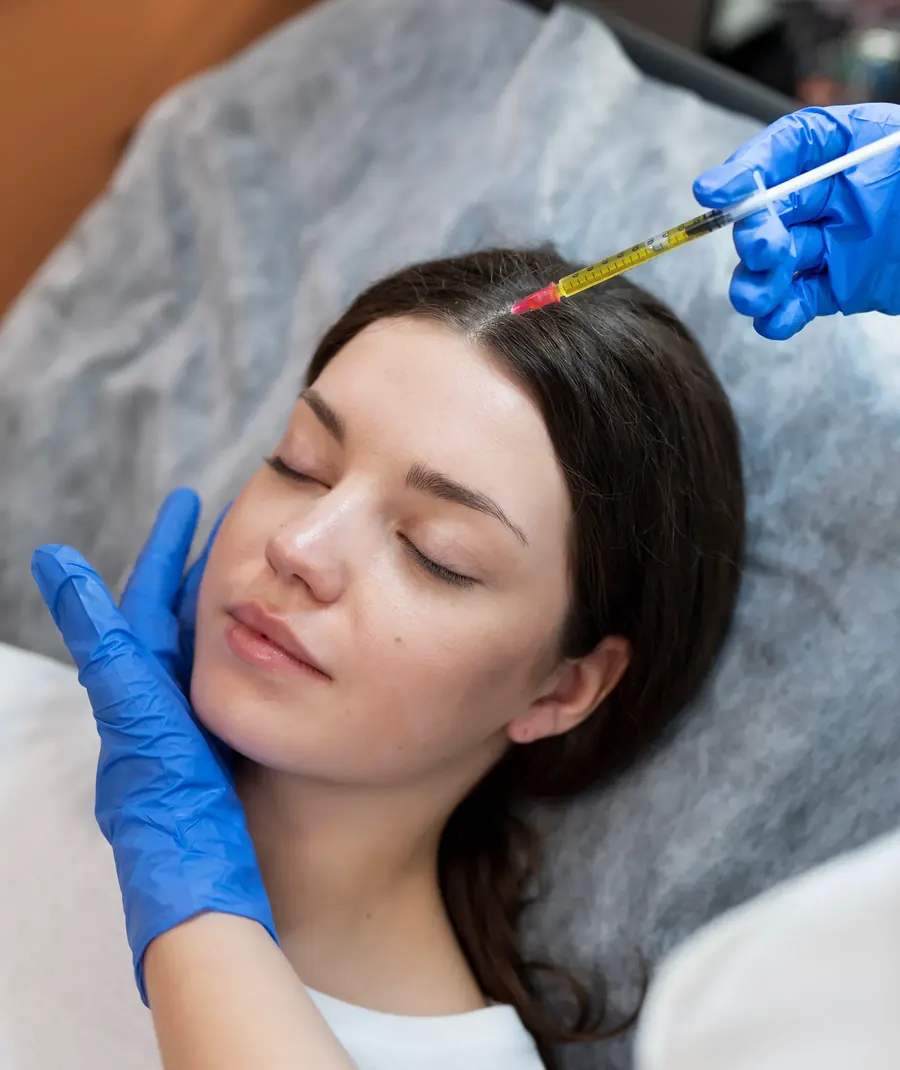
Every plan starts with an assessment. If your concern is health-related first, the medical consultation with a physician can be the right place to start.
FAQ
Can I get neuromodulators during pregnancy?
No. We postpone neuromodulators, like other injectables, until after pregnancy and breastfeeding.
Does the pregnancy mask go away on its own?
It often fades after the birth, but not always completely. The sun makes it worse: daily sunscreen is essential.
When can I restart my treatments?
Usually after breastfeeding ends, with your physician's approval. We confirm your eligibility at consultation.
Do stretch marks go away?
They don't disappear completely, but they fade over time, and some treatments can improve their texture.
Let's talk
Planning for after pregnancy? Request a free consultation or call us at 438 449-2380. We'll take the time to build a plan that respects your pace.
Start with a free consultation
Every plan begins with a conversation about your goals, your face and your timeline.
Book a free consultation